

For many people, making a cup of coffee is a veritable ritual, marked by movements performed thousands of times. It often takes place at specific times of the day. The process of making coffee is a crucial moment for appreciating its aroma, flavour and overall sensory experience.
The choice of coffee is, of course, essential for enjoying a moment of intense pleasure. That is why we have listed the single-origin and speciality coffees that we import from all over the world and roast in our artisan roastery, according to our customers’ preferences.
THE 5 KEY ELEMENTS OF A COFFEE DRINK
Before looking at the most well-known and effective extraction methods, it is worth understanding the factors that determine a good cup of coffee. Knowing these will help you make the most of the equipment used for extraction. The cup of coffee we enjoy is the result of the proportions of ground coffee and water, together with the brewing time and temperature.
1. The first of the fundamental elements is, of course, the raw material: the coffee! Here’s what you need to know about the processing method chosen in the shop and how to store it at home.
Coffee grinding
Cellulose is the most abundant component in a coffee bean. It does not dissolve in water, and in fact is what remains after extraction – the grounds. Everything else is dissolved and carried away by the water.
To extract coffee using water, it must be ground. Extracting from whole beans would produce a weak-tasting drink. The finer the grind, the greater the concentration—and therefore the strength—of the coffee. The grind must be uniform, so that the flow of water through the coffee grounds is suitable for the chosen brewing method.
Grinding exposes a greater quantity of coffee to the air. This increases oxidation and the loss of aroma. It is therefore best to grind the coffee just before brewing it. Vacuum-sealed storage and airtight containers are a good solution for keeping ground coffee for longer periods.
IMPORTANT POINTS TO NOTE
Storage
In general, coffee does not cope well with sudden changes in temperature or exposure to sunlight. The lipid content of coffee is particularly sensitive to temperature fluctuations and condensation. We would like to emphasise that storing ground coffee in the fridge is a bad idea, as if stored in non-airtight containers, ground coffee can absorb the odours of other foods and lose its natural, ideal moisture content.
If stored in airtight containers, however, condensation may form inside them due to temperature fluctuations. Exposure to sunlight also causes a loss of aroma, due to increased drying out.
For this reason, we recommend using an opaque container. Using grounds from brewed coffee, on the other hand, can be an excellent solution for absorbing odours from the fridge.
Types of coffee grinders
At home, coffee is ground using two types of coffee grinder. The blade grinder does not allow for adjustment of the grind size. It therefore produces an uneven coffee powder: either very fine, which will give the drink an excessively bitter taste, or with coarser grains, which will give it a sour taste.
Both are considered defects. The burr grinder, on the other hand, crushes the bean between two serrated cylinders, the burrs. It is therefore possible to adjust the distance between the burrs to achieve a consistent grind size suitable for the extraction method.
- The importance of water
The second of the fundamental elements of a coffee drink is water. It acts as a solvent, extracting the flavour, aroma and all the substances contained in the ground coffee. For this reason, it must taste good from the very first sip; it must be pleasant on the palate and must not taste of chlorine or have any other unpleasant flavours.
Water makes up between 90% and 98.5% of a cup of coffee, depending on the brewing method. A coffee brewed with hard water will taste very different from one brewed with bottled mineral water or purified water.
Water hardness
Water hardness is defined as the amount of calcium carbonate dissolved in the water. The higher the calcium carbonate content, the lower the water’s ability to dissolve the substances contained in the coffee, as these substances cannot easily penetrate the grounds. The result is a flat coffee, lacking in nuance, complexity and sweetness.
A high calcium carbonate content also affects the performance and lifespan of water heating appliances. By building up inside them, calcium carbonate clogs nozzles and inhibits the heating elements and other components through which water flows.
Minerals dissolved in water
When buying bottled mineral water, you can check the mineral content. We do not recommend using tap water straight from the tap, especially if the water supply is particularly hard. It is better to purify it using at least a jug with an activated carbon filter.
According to the Specialty Coffee Association of America (SCAA), water should have a specific total dissolved solids (TDS) content, i.e. the dry residue at 180°C. The ideal parameters are:
- odour: fresh, clean, odourless;
• colour: clear;
• total chlorine: 0 mg/l (acceptable range 0 mg/l);
• total dissolved solids (TDS) at 180°C: 150 mg/l (acceptable range 75–250 mg/l);
• calcium (carbonate): 68 mg/l (acceptable range 17–85 mg/l);
• sodium: 10 mg/l (acceptable range close to 10 mg/l);
• Total alkalinity: 40 mg/l (acceptable range 40 mg/l);
• pH: 7 (acceptable range 6.5–7.5).
- Three further key factors to consider
Ground coffee and water are the core ingredients of a coffee drink. We must take into account other factors that come into play when we decide to make it, and these are linked to the methods and equipment we choose to use.
Inadequate extraction results in a sour and astringent flavour, a process known as under-extraction. Excessive extraction, on the other hand, leads to a bitter, ashy flavour. This is known as over-extraction.
- Time
Time plays a role at various stages of coffee processing, such as the resting period after roasting and before packaging. When preparing a cup of coffee, time is taken into account to determine how long the hot water remains in contact with the ground coffee.
This can be prolonged, as in filter coffee or Turkish coffee, or last just a few seconds, as in the case of espresso. The infusion time alone does not determine the intensity of the aromas and flavour. It is therefore necessary to consider at what temperature the water is added and at what pressure it passes through the ground coffee within a given time.
- Temperature
The temperature of the water used for extraction is crucial. In most cases, it must be brought to the boil. Among cold brew methods, cold drip is certainly worth mentioning.
The water used is at room temperature. Cold drip can take up to 6 hours to extract the coffee, but it is certainly the most effective method for preserving the majority of volatile aromatic compounds, which are released rapidly during hot extraction but are inevitably lost just as quickly.
Pressure
Some coffee brewing methods rely on the force of gravity to draw water through the ground coffee and filter it through the filter, such as the pour-over. Others rely on the pressure we apply with our own strength and force, such as the Aeropress® or the French press.
Still others use the pressure generated by steam from boilers, such as the moka pot or the espresso machine. Finally, there are methods that do not rely on pressure for extraction, as the ground coffee is infused directly with water (hot or cold), such as Turkish coffee or cold brew coffee.
Each of these methods develops different aromas and flavours, and the choice depends on the result you wish to achieve for your coffee drink, taking into account how often you drink it.
You might also be interested in...


Popular products
-
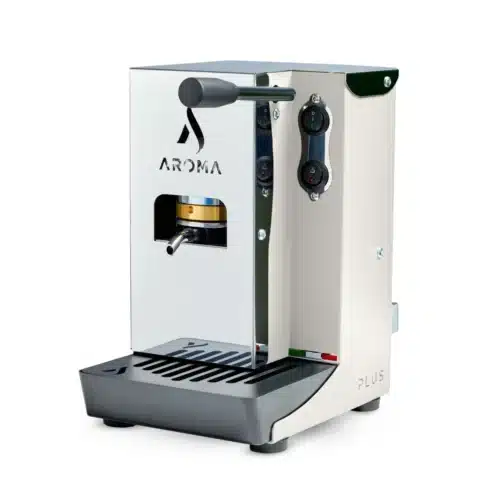 Espresso Plus Basic Machine
from 160,00 €
Espresso Plus Basic Machine
from 160,00 €
-
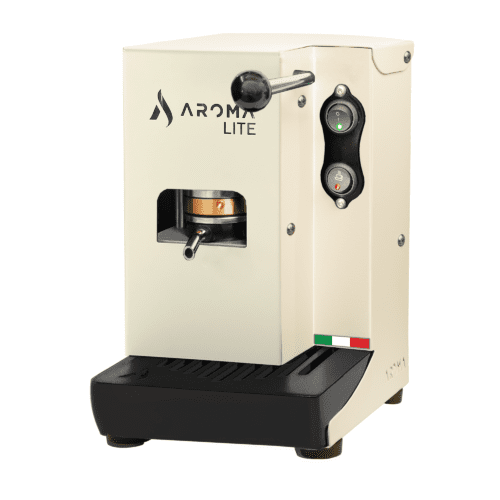 Aroma Lite espresso machine
from 155,00 €
Aroma Lite espresso machine
from 155,00 €
-
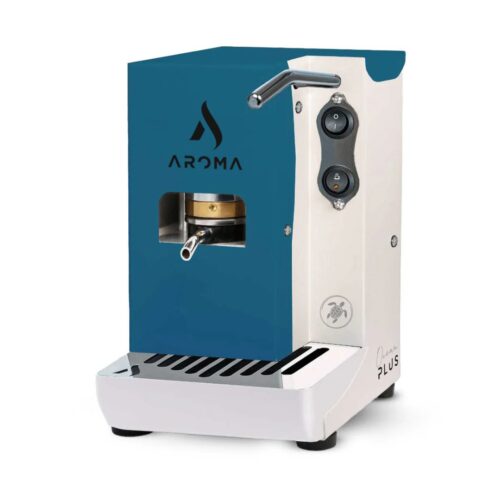 Espresso Plus Special Ocean Machine
195,00 € including VAT
Espresso Plus Special Ocean Machine
195,00 € including VAT
-
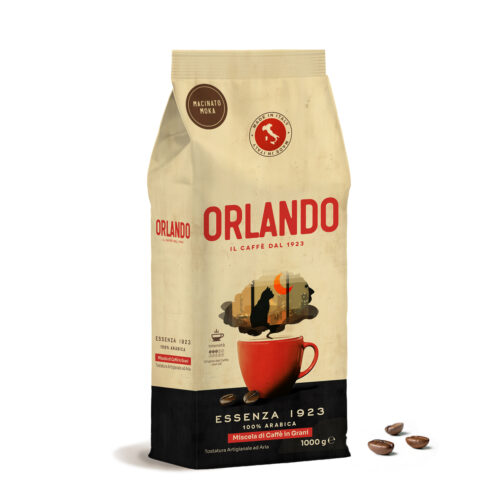 ESSENZA 1923 – 100% ARABICA ground
from 9,60 €
ESSENZA 1923 – 100% ARABICA ground
from 9,60 €